Acura = Alfa-Romeo = Alpina = Artega = Ascari = Aston-Martin = Audi = BMW = Bentley = Brabus = Bugatti = Buick = Cadillac = Caparo = Chevrolet = Chrysler = Citroen = Covini = Dacia = Daewoo = Daihatsu = Daimler = Devon = Dodge = Donkervoort = Farbio = Ferrari = Fiat = Fisker = Ford = GM = GMC = Gumpert = Holden = Honda = Hummer = Hyundai = Infiniti = Italdesign = Jaguar = Jeep = KTM = Kia = Koenigsegg = Lamborghini = Lancia = Land Rover = Leblanc = Lexus = Lincoln = Lobini = Lotus = MG = Mansory = Maserati = Maybach = Mazda = Mazel = McLaren = Mercedes-Benz = Mercury = Mindset = Mini = Mitsubishi = Morgan = Nismo = Nissan = Noble = ORCA = Oldsmobile = Opel = PGO = Pagani = Plymouth = Pontiac = Porsche = Renault = Rolls-Royce = Rover = Saab = Saturn = Scion = Skoda = Smart = Spyker = SsangYong = Startech = Stola = Strosek = Torino = Subaru = Think = Toyota = Tramontana = Valmet = Vauxhall = Venturi = Volvo = Wiesmann = Yes = Zagato = Zenvo.
Showing posts with label Toyota. Show all posts

Sunday, October 2, 2011

Toyota Corolla, 2011, Corolla LE, Corolla S model


Toyota Corolla, 2011

At the 2010 Los Angeles Auto show, the 2011 Toyota Corolla - the best selling subcompact in America - will feature new front and rear exterior styling, new interior design changes, Toyota Care complimentary maintenance plan, standard Smart Stop Technology, and two new colors. With a compelling combination of responsive, fun-to-drive performance, proven value and significant safety credentials, more than 30 million Corollas have been sold worldwide since 1966. The 2011 Corolla will go in sale in December.

The 2011 Toyota Corolla continues to offer Toyota's Star Safety System standard, which includes Vehicle Stability Control (VSC), Traction Control (TRAC), Anti-lock Braking System (ABS), Electronic Brake-force Distribution (EBD) and Brake Assist. It also features the standard Smart Stop Technology brake-override system.

Performance and Efficiency
The 2011 Toyota Corolla is  in three grades: the base-model Corolla, LE, and S. All models are equipped with the 1.8-liter DOHC four-cylinder engine, which produces 132 hp at 6,000 rpm and 128 lb-ft of torque at 4,400 rpm. Dual Variable Valve Timing with intelligence (VVT-i) controls valve timing on both the intake and exhaust camshafts to help optimize performance and fuel economy. Internal components are optimized to reduce friction.

Handling and Ride

The smooth-riding Toyota Corolla is built around a stiff body structure that relies on high tensile-strength steel, gussets and cross members for its strength, rigidity and lightweight construction. Front suspension is composed of a compact, rigid L-arm-type MacPherson strut with a stabilizer bar. The Corolla's torsion beam rear suspension employs a coil-over-shock arrangement that allows efficient packaging along with solid handling and excellent ride comfort.

Brakes consist of 10.7-inch vented discs up front for all models and nine-inch drums in the rear. An electric power-assist steering system uses a compact motor, speed reducer and torque sensor built into the steering column. The system varies the amount of assistance according to engine RPM and vehicle speed. The result is appropriate weight and responsiveness at higher speeds, and light effort at low speeds. Electric power steering reduces parasitic losses to the engine, thereby aiding fuel economy. It is also environmentally efficient, because it does not require hydraulic oil.

Safety
The Toyota Corolla is engineered to absorb and disperse impact energy throughout the entire body structure, including front and rear crumple zones. Strengthened door beltline reinforcements help share the impact load, which in side impacts is also directed to the underbody. A direct tire pressure monitor system comes standard on every Corolla.
As part of the Toyota Star Safety System, Vehicle Stability Control automatically adjusts engine output and the vehicle's braking force at individual wheels to help control any discrepancy between where the driver is steering and where the vehicle is heading.

Comfort and Convenience
The 2011 Corolla upholds a 40-plus year heritage for providing outstanding value in standard equipment. All models feature a standard all-weather package. The Toyota Corolla grade features new 15-inch steel wheels with full wheel covers; P195/65 R15 tires; a color-keyed front grille and exterior door handles; a heavy-duty rear window defogger with timer; AM/FM/CD audio with four speakers with MP3/WMA playback capability, auxiliary audio jack, and auto sound leveling; air conditioning with pollen filter; intermittent windshield wipers; daytime running lights; black folding power mirrors that are larger for improved rear visibility; tilt and telescopic steering wheel; multi-information display with outside temperature, instant fuel economy, average fuel economy, average speed and travel distance; fabric-trimmed six-way adjustable drivers seat; four-way adjustable front passenger seat; 60/40 split folding rear seats and a 12-volt auxiliary power outlet.

The popular Toyota Corolla LE grade adds variable intermittent windshield wipers with mist cycle; color-keyed power heated outside mirrors; AM/FM/CD audio with six speakers with MP3/WMA playback capability, auxiliary audio jack, and auto sound leveling; cruise control; multi-function in-key remote keyless entry system with lock, unlock, trunk release, panic and remote illuminated entry; power windows with driver side auto down; tilt/telescopic sport steering wheel with metallic accents and audio controls; and power door locks with shift-activated automatic locking feature.

The sporty Corolla S grade adds newly designed 16-inch alloy wheels and 205/55 R16 tires; multi-reflector halogen headlamps with black housing; color-keyed front and rear underbody spoilers, sport side rocker panels, unique S badge and rear mudguards; color-keyed rear spoiler, integrated fog lamps; front sport seats; chrome-tipped exhaust; an new tilt/telescopic sport steering wheel with audio controls; chrome exhaust tip; sport fabric-trimmed six-way adjustable drivers seat and four-way adjustable front passenger seat; metallic style interior trim and analog sport instrumentation.

Exterior Design
The Toyota Corolla's design, created with input from styling studios in Turin, Italy, strikes a sporty profile. New 2011 exterior-design changes were made on the front bumper, radiator grille, front lower grille, headlamps, trunk lid, rear license garnish, rear combination lamp, rear bumper and reflex reflector. Built on a 102.4-inch wheelbase, the Corolla provides room for five, and its 12.3 cu. ft. trunk rivals midsize cars' trunks in capacity. The sporty profile is the result of pulling the A-pillar forward and the C-pillar rearward, which also enhances aerodynamic performance for optimal fuel efficiency.

Just above the dense mesh grille that helps form the now familiar Toyota T-face, an interlayer of anti-chipping coating is used to help minimize paint damage from stone chips. The side-view mirrors have increased in size for excellent visibility; heated side-view mirrors are available. The standard body kit on S the model adds a sporty look while also enhancing aerodynamics. The kit includes a front spoiler, rocker moldings, and upper and lower rear spoilers. Engine undercovers improve air management under the car on all models.

Toyota designers focused significant attention on reducing wind noise. The A-pillar is specially profiled for this purpose. The windshield is made from acoustic glass and the window-frame structure is designed to reduce vibration of side glass. The windshield molding, wiper blade covers and shape of the cowl air intake louvers are all designed to minimize noise. Windshield washer nozzles are partially shielded by the rear edge of the hood, instead of sitting atop the hood or cowling. Inside, the carpeting is designed to better absorb noise.

Interior Design
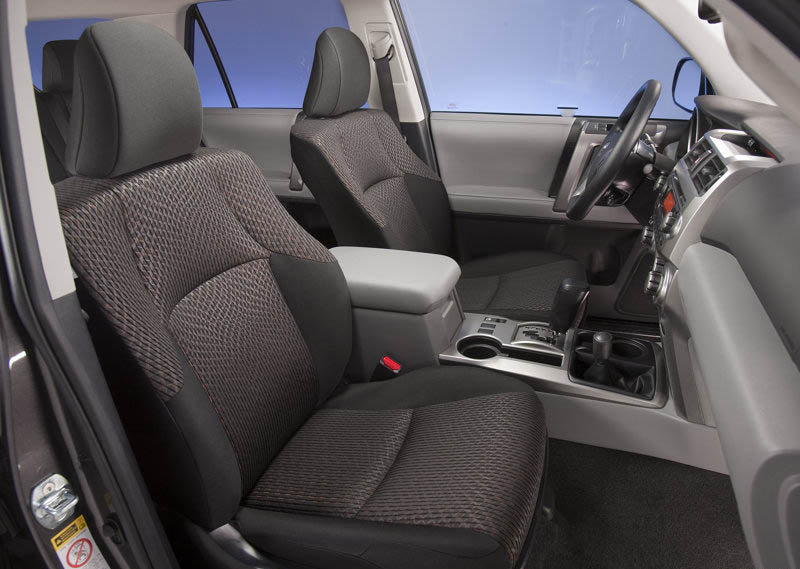
The 2011 Corolla features a number of new interior design features that enhance its distinctive style. A new seat color and pattern enhances Toyota Corolla's contemporary looks, while the combination meter design has been changed with the aim of enhancing clarity. The instrument panel upper and door trim upper color has been changed, revealing a sophisticated cabin appearance. A newly designed steering wheel on the Corolla S is provides a sporty image.

Toyota

Toyota

Toyota

Toyota

Toyota

Toyota Auris HSD, 2011, European Toyota Hybrid Car


Toyota Auris HSD, 2011

The Toyota Auris HSD (Hybrid Synergy Drive) introduces full hybrid technology to a core model at the heart of Toyota's model line-up. It marks the first step in the deployment of HSD technology across the company's entire European model range by the early 2020s.
Built in Britain at Toyota Motor Manufacturing UK's Burnaston factory, it targets an important shift in customer perceptions of full hybrid drive technology.

Exterior design
The Toyota Auris HSD adopts the new exterior styling introduced across the Auris 2010 model range, including a completely redesigned front-end. It also displays a number of model-specific features which help improve the car's aerodynamic efficiency and reference the presence of Toyota's Hybrid Synergy Drive powertrain.
The opening in the upper front grille has been optimised to promote a smooth flow of air over the upper half of the body, and the lower grille has been made larger to reduce airflow resistance and improve engine cooling efficiency.

With a revised foglamp configuration, the flat, vertical surface of the corners of the front bumper corrects the airflow as it passes over the front wheels, helping minimise turbulence in the wheelarches.
Further improvement in aerodynamic efficiency is achieved by a ride height reduced by 5mm; purpose-designed alloy wheels with integrated aerodynamic caps; low rolling resistance tyres; and a large, roof-mounted rear spoiler. Working together to smooth and control the flow of air over the car, these HSD-specific design modifications reduce the coefficient of drag from Cd0.290 to 0.283, contributing to reductions in fuel consumption and CO2 emissions.

The Interior design
The interior features a number of modifications, including a revised instrument binnacle in which the tachometer has been replaced by an Eco Drive Assist Monitor. The centre-dial information panel includes additional HSD-specific information such as Energy Flow and Eco Drive Result monitors.
A hybrid blue smart start button has been added to the side of the instrument cluster and the centre console incorporates switches for the Parking Control and EV, ECO and Power drive modes, and a shift-by-wire gear lever.

The illumination is changed to display greenish-white numbers on a hybrid blue background on the meter panel, audio and heating controls, and the Smart Start, Drive Mode and Parking Control switches.
A choice of upholsteries specific to the model will also be available: a blue-flecked fabric or Alcantara panels with leather surrounds.

Hybrid Synergy Drive
Toyota Auris HSD is a full hybrid capable of operating in petrol and electric modes alone, or a combination of both. Its Hybrid Synergy Drive system delivers the energy-saving qualities of a series hybrid, combined with the performance benefits of a parallel hybrid.

The technology delivers impressive, seamless acceleration and remarkably quiet running, with class-leading fuel consumption and CO2 emissions from 74.3mpg and 89g/km.
Toyota's latest generation Hybrid Synergy Driver uses a 1.8-litre VVT-i petrol engine, a powerful electro motor, generator, high performance battery and a power control unit. A power split device with a planetary gear system combines and reallocated power from the engine, electric motor and generator according to the car's operational requirements.

The lightweight and compact four-cylinder, 1,798cc Atkinson Cycle VVT-i engine develops 97bhp at 5,200rpm and 142Nm of torque at 4,000rpm. The high performance permanent magnet synchronous 60kW electric motor generates a maximum 207Nm between zero and 13,000rpm.
Powered by the hybrid battery, the electric motor works in tandem with the petrol engine to boost acceleration in normal driving. When the car is operating in EV (electric vehicle) mode, it alone powers the driven wheels.
Toyota Auris HSD eco driving experience
The Toyota Auris HSD has four driving modes, including three that can be selected "on-demand" by the driver to maximise the HSD powertrain's capabilities and provide comprehensive eco driving support for those who want to adopt a more environmentally efficient style of driving.
EV mode allows for ultra-quiet running on electric motor power lone, giving zero fuel consumption and emissions. ECO mode maximises efficiency and fuel economy, and Power mode boosts system performance. In addition, an Eco Drive Monitor helps driver's maximise the HSD system's efficiency.

The driver can monitor the flow of energy around the HSD system in each mode, via the multi-information display in the instrument panel, which helps promote an easy, fuel-efficient driving technique. There is also a clear and simple power consumption gauge that shows how much power is being used or generated at any given time.

The inherent quietness of Hybrid Synergy Drive, Toyota has paid special attention to NVH reduction measures to create a calm and quiet cabin environment at all speeds. Road and engine noise have been rigorously suppressed with extensive use of sound-proofing materials. Full-thickness glazing and a multi-layer acoustic windscreen further reduce noise for quieter performance at cruising speeds.

Saturday, March 5, 2011

Toyota iQ3, 2010

Toyota iQ3, 2010


Toyota iQ range is extended for the first time since launch with the introduction to the line-up of a 1.33-litre engine. The highly efficient lightweight unit, already successfully deployed in Auris, Yaris and Urban Cruiser is offered exclusively in the new Toyota iQ3 model.

Benefiting from Toyota Optimal Drive technology for a class-leading combination of power, fuel economy and low emissions, it uses Dual VVT-i control of both intake and exhaust valves to deliver strong torque at low to medium engine speeds and achieve maximum efficiency.

The headline figures broadcast the exceptional customer benefits in terms of running costs. With manual transmission, Toyota iQ3 returns an official 58.9mpg in combined cycle driving, and 113g/km of CO2 - Band B for road tax (£35 annual charge) - both of which are best-in-class figures. Equipped with Toyota's new Multidrive CVT system, fuel economy is just as good, while emissions rise slightly to 120g/km, but remain within Band B.

This achievement is not at the expense of performance. The engine develops a maximum 98bhp at 6,000rpm and peak torque of 125Nm at 4,400rpm. Nought to 62mph can be achieved in 11.8 seconds (11.6 with Multidrive) and top speed is 106mph. This underlines the fact that Toyota iQ is more than just a city runabout, giving a strong, stable and enjoyable drive at motorway speeds.

Matched to a compact, lightweight six-speed manual gearbox, the engine features Toyota's Stop & Start system. This automatically cuts the engine when the car comes to a stop and the gear shift is moved to neutral; when a gear is selected, the engine restarts quickly (in just 0.4 seconds) and seamlessly, thanks to the use of a permanently engaged gear mechanism. In urban driving - Toyota iQ's natural environment - Stop & Start can yield fuel consumption savings of up to 15 per cent.

Toyota iQ3 is also available with Multidrive, Toyota's new stepless CVT (continuously variable transmission).

One of the key elements of the 1.33-litre engine is its piston design. Smaller and lighter than on the previous 1.3 unit, they are designed with a smaller contact area and use carbon ceramide, an advanced material more commonly used in Formula One engineering, to reduce friction.

Toyota iQ3 carries forward the premium specification of iQ2 but with some additional, exclusive features: the door mirrors have chrome-finished housings and the car rides on larger, 16-inch dual five-spoke alloy wheels. The choice of six paint finishes includes Decuma Grey metallic, which is also exclusive to Toyota iQ3.

The standard equipment features include automatic headlights and wipers, climate control, electric folding and heated door mirrors, Smart Entry and Start, auto-dimming rear view mirror, six-speaker sound system, front fog lights and a leather trimmed steering wheel. Nine airbags are fitted, including the world's first rear window airbag, and the active safety package includes Vehicle Stability Control (VSC) with Traction Control (TRC).

Toyota iQ Accessory Packs and Options
Four themed accessory packs have been assembled for iQ, giving owners an easy way to give their car that something extra.
    * iStyle (£295) adds chrome surrounds to the front fog lights, chrome side sills, a chrome strip on the tailgate and aluminium scuff plates.
    * iUrban (£345) provides rear parking sensors, a reversible rubber/velour boot liner (for use when the rear seats are folded flat) and carpet mats.
    * iSports (£495) focuses on style with a neat roof spoiler, deep rear skirt and inverted delta-shape chrome exhaust tailpipe finisher.
    * iConnect (£375) keeps you in touch on the move with Bluetooth, plus the neat detachable Glovebag to store documents and small personal items.

Toyota FT-EV II Concept, 2010

Toyota FT-EV II Concept, 2010


2009 Tokyo Motor Show marks the world debut of the Toyota FT-EV II Concept, a compact electric vehicle designed for short distance travel. Its design and technology look to a future society where EVs will be in common use, among a range of different means of transport that will reflect user requirements, the type of energy used and the local energy supply infrastructure.

Toyota FT-EV II Concept is a high-quality vehicle concept, designed primarily for urban driving with a body that is even more compact than that of the Toyota iQ, but still with room for four seats on board.

Drive-by-wire technology allows all the vehicle functions to be controlled using a joystick, including the accelerator, brakes and steering. Removing the throttle and brake pedals frees up legroom for the four-seat design.

The exterior features a low front cowl and an additional window below the level of the windscreen to give extra forward visibility. To improve safety through the quality of all-round vision, the rear lamp clusters are see-through LED units. To ensure easy access in tight spots, there are electric sliding doors on both sides.

Top speed is above 60mph and a full-charged battery will give a range of more than 50 miles, which is ample for most urban journeys. The ride is quiet and comfortable with smooth acceleration, thanks to Toyota-developed motor control technology, itself part of the hybrid system that sits at the heart of the company's environmental technologies.

Toyota FT-EV II Concept Dimensions
    * Length: 2,730 mm
    * Width: 1,680 mm
    * Height: 1,490 mm
    * Wheelbase: 1,900 mm

Toyota FT-86G Sports Concept, 2010

Toyota FT-86G Sports Concept, 2010


The dramatic show car previews a rear-wheel-drive sports coupe that is destined to add appeal and excitement to the Toyota brand post 2012.

As the concept car illustrates, the production model is the spiritual successor to Toyota's sports-car heritage that features names such as Supra and MR2.
Its named is derived from the AE-86 Corolla - a small, light-weight, rear-wheel drive coupe from the 1980s that has achieved cult status.

Toyota's aim is to bring a new level of excitement to Toyota showrooms and customers, connecting with younger drivers and promoting the fun of sports-car driving.

The Toyota FT-86G is the second concept revealed by Toyota in the past year that points to a next-generation production sports coupe.

It has gained tweaks to performance and styling that make it sleeker and more aggressive than the Toyota FT-86 concept shown at 2009 Tokyo Motor Show.

The "G" suffix signifies a sports conversion that has stretched the original by 30mm, widened it by 20mm and lowered it by 30mm (4190mm × 1780mm × 1230mm).
Sharper looks come from a totally redesigned front end that incorporates a larger air intake with visible intercooler, as well as a vented bonnet.

At the rear, a large carbon-fibre wing, diffuser and oversized twin exhausts contribute to the edgier styling.

The Toyota FT-86G Sports Concept sits on low-profile Bridgestone 19-inch rubber - 245/40 at the front and 275/35 at the rear, while Recaro sports seats complete the "G" conversion of the dynamic four-seater.

The concept retains classic sports-car underpinnings with a front-mounted 2.0-litre engine - now boosted with a turbo - driving the rear wheels through a six-speed manual transmission.
Toyota's plan to return to the sports-car market is in response to the edict by global president Akio Toyoda for the company to re-connect with younger buyers by producing fun-to-drive models.

Friday, January 21, 2011

Toyota Corolla, 2010

Toyota Corolla, 2010


 The Toyota Corolla, the 10th generation of the world's best-selling car, will benefit from a model range update throughout Europe from May 2010. Toyota Corolla 2010 will offer customers revised, more sophisticated exterior styling and further enhanced, higher quality interior design.
    * Sophisticated design, improved quality, advanced technology
    * More dynamic exterior design
    * Enhanced perceived interior quality
    * Advanced Technology
    * All engines feature Toyota Optimal Drive

Toyota Corolla 2010 - sophisticated design, improved quality, advanced technology
Toyota Corolla's distinctive, evolutionary design has become an icon of Toyota's core values of superior quality, style, driving pleasure and innovation. It offers European customers maximum interior space, a high quality passenger environment and impressive comfort levels.

With 62,000 units sold in 2009, the Toyota Corolla remains the world's best-selling C-segment sedan.
Toyota Corolla 2010 reinforces the superior quality, style and innovation of Toyota's best-selling sedan. It features a new, more sophisticated design, a higher quality interior and advanced, user-friendly equipment.

The up-dated Toyota Corolla 2010 will further enhance the Toyota sedan's reputation for offering outstanding value for money in the C-sedan segment. It will remain the company's core model in Eastern Europe, maintaining its best-selling status throughout the region.

Dynamic exterior design
The exterior of the Toyota Corolla has been revised to create a more advanced, sophisticated and dynamic image, reinforcing the Toyota sedan's premium quality status within the C-segment.

A new front features a redesigned bumper, radiator grille and lower grille. This emphasises the car's low centre of gravity and driving stability. The new headlamps further strengthen the Toyota Corolla's bold, resolute appearance.

To the rear, comprehensive changes to the license plate garnish, combination lamps, bumper and low-level reflectors have been incorporated. This creates an impression of increased width, emphasising the Toyota Corolla's broad rear stance.

Toyota Corolla 2010 also benefits from the enhanced product appeal of new, power retractable door mirrors with integral turn indicators and a new, sportier 16" wheel cap and alloy wheel design. A range of eight available body colours now includes new Red and Blue metallic finishes.

Enhanced perceived interior quality
The Toyota Corolla 2010's interior has been improved, strengthening the Toyota sedan's reputation for superior quality, style and innovation.
A new, flat bottomed steering wheel, finished in leather on higher grade models, features a thicker, more comfortable grip cross-section.

The combination meter design features a colour change from amber to white, and the instrument panel and door handle trim are now finished in a more sophisticated, high-brightness silver coating. The same high quality finish is also available on the centre console and door switch surrounds.
A wireless trunk opening function has been added, giving customers the additional convenience of remote operation via a button on the ignition key.

Two interior colour schemes are available - dark grey and light grey. Both interior designs feature a highly functional yet sophisticated dark grey finish to the upper dashboard area. Improved Mid and High grade seat fabric and a newly available, Alcantara upholstery further underline the superior quality of the Toyota Corolla 2010.

Advanced technology
The AM/FM/CD audio system, with a choice of four or six speakers is now available with Bluetooth mobile phone connectivity. The system features USB and AUX sockets for the connection of portable music playing devices. The USB jack is located within the centre storage box to allow for the secure stowage of MP3 players whilst on the move.

The Toyota Corolla also features an innovative, Gentex rear view mirror. With automatic anti-glare dipping, the mirror incorporates a 3.3 inch rear view monitor which displays an image from the rear view camera whenever reverse gear is engaged. The display incorporates static guidelines to further assist drivers with parking manoeuvres.

All engines feature Toyota Optimal Drive
The Toyota Corolla 2010 engine line-up offers customers a choice of 1.33 litre Dual VVT-i and 1.6 litre Valvematic petrol engines, and 1.4 and 2.0 litre D-4D diesel units. Every engine features the performance- and economy-enhancing benefits of Toyota Optimal Drive, and meets Euro 5 emissions standards .

Designed to optimise the balance of performance and driving enjoyment with fuel economy and low emissions, Toyota Optimal Drive focuses on several key aspects of powertrain development such as environmentally friendly technologies, low friction components, lightweight, compact design and enhanced combustion efficiency.

The application of Toyota Optimal Drive across the model range ensures that the Toyota Corolla 2010 not only demonstrates the optimum balance between performance and emissions, but also that its fuel consumption and CO2 emissions are amongst the lowest in the segment.
The Toyota Corolla 1.4 D-4D boasts CO2 emissions of just 125 g/km, and the 1.33 Dual VVT-i with Stop & Start technology only 133 g/km. These significant reductions in CO2 emissions will offer owners a tax advantage in many European markets.

Toyota Camry, 2010

Toyota Camry, 2010


The Toyota Camry has an upgraded standard powertrain for 2010. For sporty performance, SE grade get additional tuning and gets 179 horsepower, 21 more horsepower than the previous four-cylinder engine. The new engine can be combined with a six-speed manual transmission or a six-speed automatic transmission with sequential shift. A powerful 3.5-liter V6 delivering 268 horsepower is also available.

The Exterior changes to the gas model Toyota Camry include a newly designed grille and front bumper, an enlarged lower intake, larger projector headlamps and restyled tail lamps. The Toyota Camry and LE grades feature restyled standard wheel covers.
The Toyota Camry Hybrid exterior enhancements will include a unique hybrid grille, a distinct front bumper, a wider lower intake, restyled fog lights and 16-inch alloy wheels.

The Toyota Camry Hybrid, equipped with Toyota's industry-leading Hybrid Synergy Drive, certified as an Advanced Technology The Partial Zero Emissions Vehicle (AT-PZEV) is just one of a handful of cars that meets this strict standard, producing over 70 percent less smog-forming emissions than the average new car.

The Inside,
The Toyota Camry and LE grades are available with an optional audio system equipped with a new USB port for auxiliary music sources, Bluetooth®, integrated satellite radio, single-CD, and MP3 and streaming music capability. Previously an option, all Toyota Camry gas models will now be equipped with Vehicle Stability Control with traction control. Auto up/down power windows with jam protection on all four doors is standard equipment. Toyota Camry Hybrid adds a newly designed meter cluster and Fraichir, a combination of silk protein and synthetic fiber, cloth seating surfaces that are gentle to the skin.

Toyota 4Runner, 2010

Toyota 4Runner, 2010


The first Toyota 4Runner sport utility vehicle (SUV) was launched back in 1984 it was a revolutionary new vehicle based on the mechanics of the four-wheel-drive Toyota pickup truck. The Toyota 4Runner combined the versatility and go-anywhere ability of four-wheel-drive with the comfort and utility found in passenger cars.

25 years, four generations and more than 1.5 million sales later, the Toyota 4Runner continues to evolve while remaining close to its roots. The all-new fifth-generation Toyota 4Runner is even more rugged and athletic, and packed with more power and better mileage. A completely redesigned interior and unique cargo area make the newest Toyota 4Runner smarter, more comfortable, and more versatile than ever.

More rugged than the Toyota Highlander and more versatile than the FJ Cruiser, the 4Runner combines the toughness and durability of body-on-frame construction with multi-use design that excels at a wide variety of tasks.
The newest Toyota 4Runner is taller, wider and longer for 2010, and is available in a variety of configurations. It will be offered in three models, top-of-the-line Limited, a well-equipped SR5, plus a Trail grade for those who require maximum off-road capability.

Exterior Styling
The design strategy for the new Toyota 4Runner emphasizes a more rugged, powerful stance. Large diameter wheels and tires were added to not only improve off-road performance, but also enhance the Toyota 4Runner's truck-based characteristics. In addition to its styling emphasis on ruggedness and outdoor adventure, the new design utilizes a combination of Toyota's classic boxy form and progressive styling.

All Toyota 4Runner grades feature rugged new bumpers and wider shoulders, with newly designed head- lamp and tail-light systems, which offer a newly-minted, technical design quality and better nighttime performance. The front ends square fender flares meld with a muscular profile that links with a beefy and square rear bumper and back door.

Aluminum alloy wheels are 17-inches in diameter on SR5 and Trail grades and 20-inches on the Limited, and include a full size spare.

New Engine Choices
The 2010 4Runner is powered by a new 4.0-liter V6, which now generates 270 horsepower and 278 lb-ft of torque. Through the use of advanced engine management that includes dual independent Variable Valve Timing with intelligence (VVT-i), the new 4.0-liter engine offers the best of both worlds, adding more power while improving efficiency. For 2010, the new V6 engine produces 34 horsepower more than the prior V6, and 10 horsepower more than the optional V8 of the previous generation.

4x4 Capability Designed-In
To build on its tradition of rugged body-on-frame construction, the newest Toyota 4Runner shares the same platform as the FJ Cruiser. Extensive frame and body reinforcements have been added, using high-tensile materials to add strength without adding weight. SR5 and Trail 4x4 models have a two-speed lever-operated, part-time system with neutral position, while the Toyota 4Runner Limited is equipped with full-time, four-wheel-drive with a locking center differential and employs a three-mode, center console-mounted switch. The new Toyota 4Runner is also equipped with a stronger rear differential over the previous model, thanks to a gear ring that has increased in size from 7.87 to 8.18 inches.

On-Road Driving Dynamics
The new Toyota 4Runner may be a truck-based SUV, but it offers the kind of drivability and riding comfort more often associated with car-based platforms.

Coil springs over gas shocks are used at all four corners for a comfortable ride and controlled handling. A double-wishbone independent front suspension, combined with new, variable-flow rack and pinion steering, makes for precise control on demanding roadways. The four-link rear suspension minimizes rear axle hop and assures a smooth ride for back seat passengers.

The Limited grade comes standard with an X-REAS suspension system that further improves performance, comfort and control. X-REAS automatically adjusts the damping force of shocks when driving over bumpy surfaces, or when cornering. The system uses a center control absorber to cross-link shocks on opposite corners of the vehicle, substantially reducing pitch and yaw by offsetting opposing inputs. With X-REAS the new Toyota 4Runner corners flatter, smoother, and handles choppy pavement more easily.

Every Safety Precaution Considered
On-road vehicle dynamics are further enhanced by a suite of high-performance, state-of-the-art safety systems. Standard on 4Runner is Toyota's Star Safety System™, which includes Vehicle Stability Control (VSC) with traction control (TRAC), an Anti-Lock Brake System with Electronic Brake-force Distribution (EBD) and Brake Assist. Vehicle Stability Control (VSC) helps to ensure stability by compensating for oversteer or understeer. The system uses selective braking and modulated engine output to keep the vehicle in line with the driver's intended course. On 4x2 vehicles, the Auto LSD (Limited Slip Differential) system allows for better traction on slippery sections of roadway.

The four-wheel ABS with EBD provides the Toyota 4Runner anti-lock stopping control with optimal brake proportioning, whether the vehicle is loaded or unloaded. Hill-start Assist Control (HAC), standard on all 4x4 models and the 4x2 V6, suppresses backward roll when switching from brake to accelerator. All 2010 4Runners have active headrests for driver and passenger, three-point seat belts for all seats, an energy-absorbing body structure and an energy-absorbing hood to help protect pedestrians.

The 2010 4Runner now offers the new Safety Connect™ telematics system. Available by subscription, with or without the optional navigation system, Safety Connect offers four safety and security features: Automatic Collision Notification, Stolen Vehicle Location, Emergency Assistance Button (SOS), and Roadside Assistance.

In case of either airbag deployment or severe rear-end collision Automatic Collision Notification is designed to automatically call a response center. If a response agent cannot communicate with the occupants, the agent can contact the nearest emergency-services provider to dispatch assistance.

Pushing the in-vehicle "SOS" button allows drivers to reach the response center to request help in an emergency as well as for a wide range of roadside assistance needs. If a Toyota 4Runner equipped with Safety Connect is stolen, after a police report is filed and the driver contacts the response center, agents can work with local authorities to help locate and recover the vehicle.

Monday, November 22, 2010

Toyota Auris, 2010

Toyota Auris, 2010
<Click thumbnails to enlarge>


Launched in 2007 at the heart of the highly competitive European C-segment, the Toyota Auris has built a solid reputation for roominess, comfort, practicality and reliability combined with a secure, economical driving experience.

The application of Toyota Optimal Drive across the Toyota Auris range in 2009 has already effected a significant improvement in the model's environmental performance, lowering CO2 emissions to segmentbest levels. Even before the 2010 introduction of Hybrid Synergy Drive to the model range, the overall Toyota Auris CO2 average has been reduced from 152 g/km in 2007 to 142 g/km in 2009.

Exclusively designed for the European market, the Toyota Auris HSD introduces full hybrid technology to a core model at the heart of the Toyota line-up, the first step in the deployment of HSD (Hybrid Synergy Drive technology) across the company's entire European model range by the early 2020s. Built at Toyota Motor Manufacturing UK, it targets an important shift in customer perceptions of full hybrid technology.
 
With remarkably low 89 g/km CO2 emissions , the Toyota Auris HSD plays a significant role in further reducing Toyota's whole-fleet CO2 average which, having fallen by 16 g/km between 2008 and 2009, already stands at just 130 g/km.
The C-segment remains a core element of the volume market, representing almost 20% of total European new car sales. Toyota plans to sell 101,000 Toyota Auris models in 2010 and, in 2011 - the first full year of sales with all engine variants available - 130,000 units.

Design

The Toyota Auris 2010 combines dynamic exterior design changes with extensive interior improvements in quality, materials, ergonomics, driving comfort, and visual appeal. The Toyota Auris HSD incorporates several unique styling details to improve the car's aerodynamic performance. The interior incorporates hybrid-specific instruments, switchgear and upholstery.

Exterior design: a stronger, more confident road presence

Redesigned bumpers have increased the front and rear overhangs by 15 mm and 10 mm respectively. As a result the Toyota Auris 2010 has increased in overall length by 25 mm to 4245 mm, while the long, 2600 mm wheelbase remains unchanged.

With a new horizontal bar-type grille, more aggressive headlamp clusters, LED daytime running lights and a wider lower bumper air intake, the entire front of the Toyota Auris 2010 has been restyled to enhance the car's stable, ground-hugging stance and create a more youthful image.

The rear design has been strengthened to provide a stronger, more confident road presence. The bumper corners have been extended outwards and create a new 'catamaran' bumper profile which accentuates the Toyota Auris 2010's muscular proportions and wide track.

The latest addition to the model line-up, the Toyota Auris HSD incorporates several unique exterior design features which both improve the car's overall aerodynamic efficiency and indicate the presence of Toyota's Hybrid Synergy Drive powertrain.

The upper grille opening has been optimised to help the air flow smoothly over the upper half of the body, and the size of the lower grille has been enlarged to reduce airflow resistance as well as improving engine cooling efficie

Housing a revised foglamp configuration, the flat, vertical surface of the bumper corner not only reinforces the Toyota Auris HSD's broad stance and driving stability, but also corrects airflow as it passes over the front wheels to minimise wheel arch turbulence.

Allied to a 5 mm lowering of vehicle ride height and a choice of purpose-made, 15" or 17" alloy wheels with integrated, aerodynamic caps and low rolling resistance tyres, a large, roof mounted rear spoiler further improves the Toyota Auris HSD's aerodynamic efficiency.

Acting in combination to smooth and control the flow of air over the car, these HSD-specific design modifications have reduced the Toyota hybrid's coefficient of drag from Cd 0.290 to 0.283, effecting reductions in both fuel consumption and CO2 emissions.

Interior design: improvements in quality, ergonomics and visual appeal

Soft touch materials now cover the top of the driver's instrument cluster and the upper glove box, and the seat upholstery has been upgraded across the range. The height of the centre console storage box has been raised by about 50 mm, and it now functions as an armrest. A new, more comfortable steering wheel incorporates redesigned audio and Bluetooth phone control switches.

The unique, bridged centre console which brings the gear lever, handbrake and instrumentation within the closest possible reach of the driver has a new, bright metallic finish matched by the door handles. The handbrake design has been revised with a new lever release button, a tactile, ergonomic grip and lower seating in the release position.

Control panel colour and finish changes have enhanced switch layout visibility, and the illumination of the Optitron meter dials has been changed to white for improved clarity and visibility.

In conjunction with the introduction of Hybrid Synergy Drive, the Toyota Auris HSD interior features several significant modifications. The driver's instrument binnacle has been revised, with the tachometer replaced by an Eco Drive Assist Monitor. The centredial information panel includes additional, Hybrid Synergy Drive- specific information such as Energy Flow and Eco Drive Result monitors.

A hybrid blue Smart Start switch has been added to the side of the instrument cluster. The centre console incorporates a Parking Control switch, EV, Eco and Power drive mode switches and a shiftby- wire transmission lever with a high-quality silver paint finish.

Toyota Auris HSD instrument and switchgear illumination has been amended to greenish white numbers on a hybrid blue background for the meter panel, audio and heating controls, and the Smart Start, Drive Mode and Parking Control switches.

Powertrains and driving dynamics

The Toyota Auris 2010 powertrain line-up features a choice of full hybrid drive, and three petrol and three diesel engines offering the performance- and economy-enhancing benefits of Toyota Optimal Drive. The introduction of a Hybrid Synergy Drive model makes this is the most comprehensive range of powertrains available in the C-segment, catering for every customer requirement.

As a result of Toyota Optimal Drive technology, the Toyota Auris will be the first Toyota to comply with Euro 5 emission standards across the entire European model range by July 2010.

Starting at just 118 g/km, CO2 emissions have been lowered throughout the engine range, offering significant cost of ownership benefits to fleet customers.

The introduction of the Toyota Auris HSD will create an important shift in customer perceptions of full hybrid technology. The advantages of exceptional fuel efficiency and low CO2 emissions are obvious. However, the Auris HSD customer will also experience a smooth and sophisticated driving experience -unique to the C-segment- thanks to the everyday usability, driving comfort and remarkable quietness of Toyota's multiple award-winning, full hybrid powertrain.

With remarkably low 89 g/km CO2 emissions the Toyota Auris HSD plays a significant role in further reducing Toyota's whole-fleet CO2 average which, having fallen by 16 g/km between 2008 and 2009, already stands at just 130 g/km.

1.33 litre Dual VVT-i with Stop & Start system

The 1.33 litre Dual VVT-i petrol engine generates 73 kW/ 99 DIN hp and maximum torque of 128 Nm at 3800 rpm, while returning an average fuel consumption of 6.0 l/100 km and CO2 emissions of only 139 g/km.

The unit benefits from numerous Toyota Optimal Drive engine optimisations. A combination of lightweight technology, a resin cylinder head cover and intake manifold, and a remarkably compact design has effected a substantial reduction in engine weight and size. Combustion efficiency has been improved through the use of a high efficiency intake port, a high compression ratio and long reach spark plugs.

Extensive friction reduction measures include enhanced engine block rigidity and bore circularity, an improved valve roller rocker arm design with a new camshaft profile, small, lightweight pistons with a low friction coating, low viscosity oil and a water jacket spacer.

Toyota Optimal Drive's environmental technologies are represented by the application of a wide ratio 6-speed manual transmission and optional, Stop & Start System technology.
The innovative system automatically switches off the engine when the vehicle is stopped. The world's first permanently engaged ring gear mechanism allows for automatic engine restart within half a second when the clutch is lifted, with significant reductions in engine start noise and seat vibration levels.

Thus equipped, the 1.33 litre Dual VVT-i unit's fuel consumption and CO2 emissions are lowered still further, to just 5.9 l/100 km and 136 g/km respectively.

1.6 and 1.8 litre Valvematic petrol engines

The 1.6-litre Valvematic engine develops 132 DIN hp and classleading maximum torque of 160 Nm at only 4400 rpm. When equipped with a 6-speed manual transmission, the unit returns a combined cycle fuel consumption of 6.6 l/100 km and generates CO2 emissions of only 152 g/km. MultiMode transmission further reduces both fuel consumption and emissions, to 6.3 l/100 km and 146 g/km respectively.

The 1.8 litre Valvematic engine develops 147 DIN hp and maximum torque of 180 Nm at 4000 rpm, yet the engine's combined fuel consumption is only 6.7 l/100 km, and CO2 emissions are 155 g/km. Through the application of Toyota Optimal Drive, both engines benefit from the same lightweight technology, compact design and combustion efficiency engine optimisations as the 1.33 litre unit.

In addition, friction reduction measures include an improved valve roller rocker arm design with a new camshaft profile, small, lightweight pistons with a low friction coating, enhanced engine block rigidity and bore circularity, and low viscosity oil.

The environmental technologies of Toyota Optimal Drive are represented by the application of wide ratio 6-speed manual transmissions and an optional, MultiMode transmission available with the 1.6 litre unit.

Offering class-leading efficiency, power and torque, Valvematic is a further development of Toyota's highly successful Dual Variable Valve Timing-intelligent (Dual VVT-i) system.
Adding lift and duration control to the variable inlet valve timing to deliver more power for less fuel consumption with reduced CO2 emissions, Valvematic also reduces friction and pumping losses under light engine loads, further lowering fuel consumption.

Diesel engines

The three diesel engines in the Toyota Auris 2010 model range also benefit from the extensive application of Toyota Optimal Drive technologies.

Lightweight technology and a compact design have resulted in a marked reduction in engine weight and size. Numerous combustion efficiency enhancing measures include a lower compression ratio, optimised combustion chamber dimensions, enhanced Exhaust Gas Recirculation (EGR) cooler efficiency and stainless steel exhaust manifolds with close-coupled Diesel Particulate Filters (DPF).

The adoption of Piezo injectors is of particular significance. Their high speed reaction time makes multi-phase high speed injection possible. This has the effect of both lowering the rate of combustion expansion and effecting a more thorough burn within the combustion chamber, thus further reducing particulate, NOx and CO2 emissions.

The 2.2 litre engine also benefits from Toyota's Diesel-Clean Advanced Technology (Toyota D-CAT), which incorporates a Diesel Particulate and NOx Reduction filter (DPNR).

1.4 D-4D 90 diesel engine

The 1.4 litre D-4D engine develops 90 DIN hp and maximum torque of 205 Nm at only 1800 to 2800 rpm, and may be equipped with a Diesel Particulate Filter (DPF) for CO2 emissions that are amongst the lowest in the C-segment.

When equipped with the manual transmission and a CCo, the 1.4 D-4D 90 unit returns a combined cycle fuel consumption of 4.7 l/100 km and generates CO2 emissions of only 124 g/km. Manual versions fitted with a DPF return just 4.5 l/100 km and a remarkable 118 g/km.

The outstanding, 118 g/km CO2 emissions performance has been achieved through combining Toyota Optimal Drive with various measures designed to maximise the aerodynamic and fuel efficiency of the Toyota Auris 1.4 D-4D 90, such as lowered suspension and low rolling resistance tyres.

2.0 D-4D 125 and 2.2 D-4D 180 diesel engines

With a DPF fitted as standard, the 2.0 D-4D 125 delivers 126 DIN hp and maximum torque of 310 Nm from 1800 to 2400 rpm. Combined cycle fuel consumption is 5.2 l/100 km and CO2 emissions are 138 g/km.

The Toyota Auris' powerful, 2.2 litre turbodiesel further benefits from Toyota's Diesel-Clean Advanced Technology (Toyota D-CAT), which incorporates a Diesel Particulate and NOx Reduction filter (DPNR). The 2.2 D-4D 180 unit delivers 177 DIN hp and a highly impressive maximum torque of 400 Nm between 2000 and 2800 rpm. Conversely, average fuel consumption is just 5.9 l/100 km, and CO2 emissions only 154 g/km.

6-speed manual and MultiMode transmissions

Every engine in the Toyota Auris 2010 range is mated to a Toyota Optimal Drive six-speed manual transmission featuring wide-spread ratios designed to optimise fuel consumption and lower CO2.

MultiMode transmission is available on 1.6 Valvematic petrol and 1.4 D-4D 90 diesel versions. MultiMode is an automated manual transmission with a fully automatic shift mode and no clutch pedal. It offers the driver a choice of two, fully automatic gear change modes or a manual, sequential gear change with steering wheel-mounted shift paddles.

Revised suspension and steering for an improved driving experience

Through close collaboration between Toyota's European and Japanese Research and Development teams, the implementation of regional customer feedback and extensive European testing the Toyota Auris' suspension system has been fine-tuned specifically for the customers and roads of the European market. It combines stable high speed driving performance with secure handling and superior ride comfort.

The Toyota Auris' speed-sensitive Electric Power Steering (EPS) has also been revised and refined to provide better feedback and improved vehicle agility. The Toyota Auris HSD brings the extraordinarily refined, smooth and silent Hybrid Synergy Drive experience to a Toyota mainstream model customer base for the first time in Europe.